
Context media
A filmstrip's image frames could be contextualized on the filmstrip itself by titles, subtitles, or intertexts. Information could also be placed directly onto the image.

Filmstrip from the GDR with intertexts
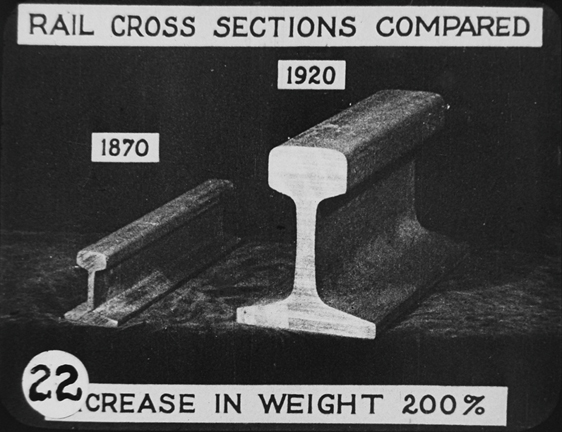
Frame of an US-American filmstrip with title, subtitle, and informations within the image
In addition (or in case no information was printed on the filmstrip itself) external context media existed. Those could be simple lists with image titles, or detailed machine-written, hand-written or professionally printed lectures. They were placed within the filmstrip box, or were shipped together with the filmstrip.
Especially in filmstrips used in propaganda context, the written message within the lectures could differ extremely from the image presented on the filmstrip itself.
Besides background information for the image frames, lectures provide technical and pedagogical information. Many lectures also stated that they might only be considered as a guideline, and the speaker had to explain and extrapolate in his/her own words. Hand-written notes or deletions give further insight into the use of the particular filmstrip.

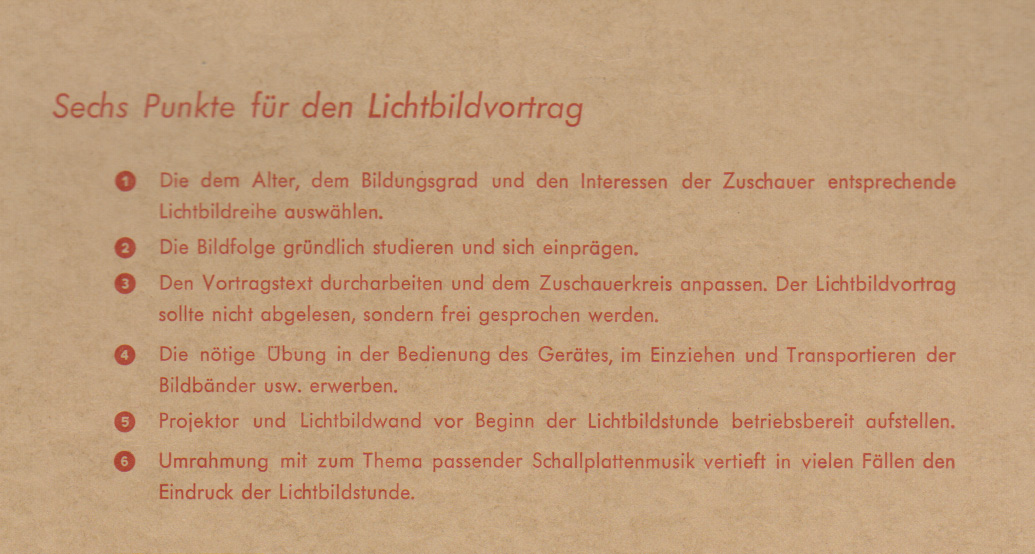
Advice for filmstrip- and slide presentation, CALIG, 1950s.
Some publishers produced inseparable text-filmstrip units that could not be used in a projector, but only with a special viewing device (for instance the Shortstrips by Encyclopedia Britannica).
Besides the lecture texts, audio media existed early on, taking the place of the lecturer, or enhancing the experience with professional music. The audio files could be placed on records, record tapes or cassette tapes. Special projectors existed to synchronize audio and image. This method was especially popular in the US.